
Torticollis
Torticollis Treatment in Anchorage, AK
Infant torticollis can make everyday positioning more challenging than parents expect. Feeding, tummy time, sleeping, being carried, riding in a car seat, or simply turning toward sounds and faces may become more difficult when a baby consistently favors one side.
At Whole Family Chiropractic in Anchorage, AK, we help families whose infants are experiencing torticollis, head-turning preferences, neck tightness, positional asymmetry, and other movement concerns better understand what may be contributing and what supportive care may be appropriate.
Our approach begins with a gentle, age-appropriate evaluation. We consider your baby’s birth history, head and neck movement, muscle tension, positioning, feeding concerns, and overall development while also recognizing when pediatric or other specialized evaluation may be necessary.
What Is Infant Torticollis?
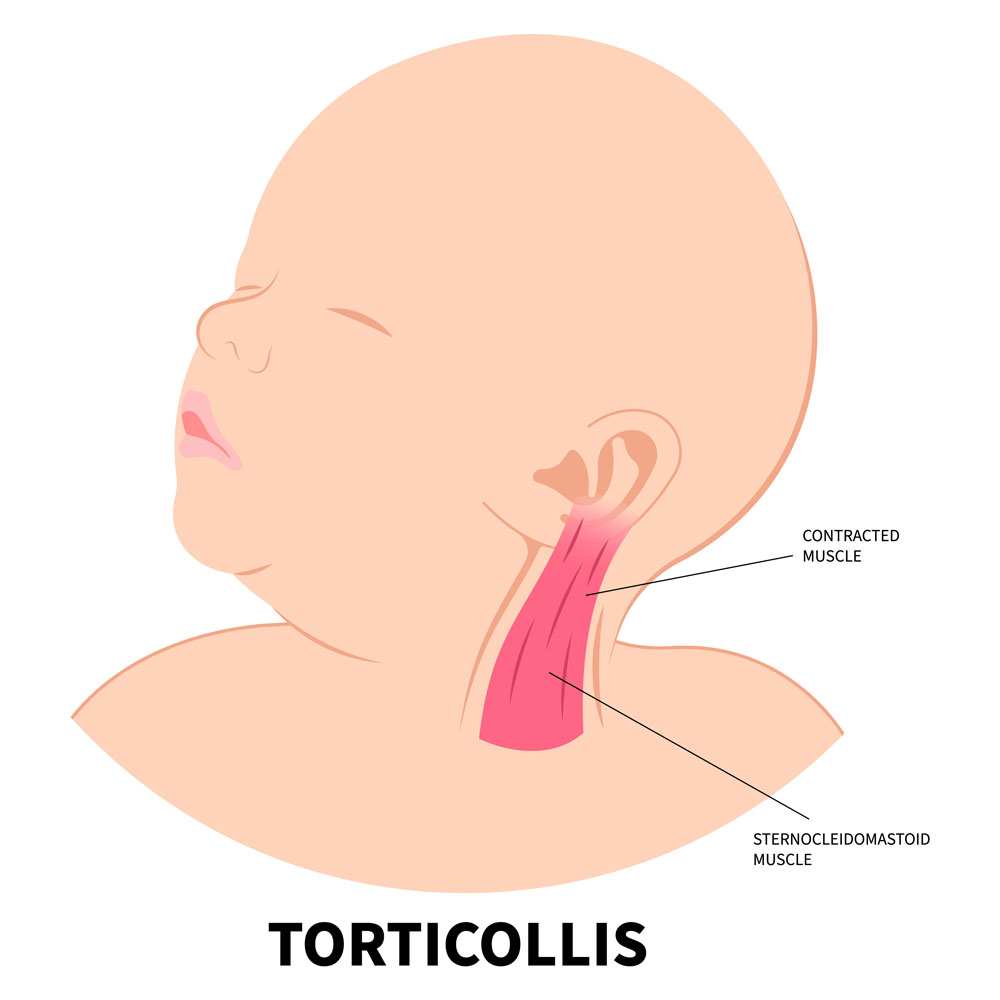
Torticollis describes a condition in which a baby’s head is tilted or rotated toward one side because of tightness, imbalance, or restricted movement involving the neck.
One common form, congenital muscular torticollis, is often associated with tightness in the sternocleidomastoid muscle along one side of the neck. Some babies are born with this pattern, while others develop a strong positional preference during the first weeks or months of life.
Common Signs of Infant Torticollis
Some babies have only a mild preference for one direction. Others may show more noticeable asymmetry that affects positioning, feeding, and normal movement.
Common signs may include:
- Consistently turning the head toward one side
- Difficulty looking equally in both directions
- Head tilting toward one shoulder
- Tightness or reduced neck movement
- Difficulty feeding comfortably on one side
- Frustration during certain carrying or feeding positions
- Flattening on one area of the head from positional preference
- Difficulty maintaining a balanced position during tummy time
The severity of torticollis can vary depending on muscle tightness, positioning habits, birth history, and other developmental factors.
When these patterns continue, it is important to determine whether the problem involves muscle tightness, restricted movement, positioning, head shape, neurological development, or a combination of factors.
When Torticollis Starts Affecting Your Baby’s Daily Routine
A strong head-turning preference can affect more than the way your baby looks while resting. You may notice that nursing works better on one side, tummy time becomes frustrating, your baby resists turning toward certain toys or voices, or positioning in a carrier or car seat seems consistently uncomfortable.
For parents, these patterns can become concerning when they persist despite repositioning at home. Early evaluation can help determine whether your baby’s asymmetry is mild and positional or whether additional support may be appropriate.
Torticollis Care for Infants in Anchorage
At Whole Family Chiropractic, our pediatric chiropractors in Anchorage evaluate infants with a gentle focus on symmetry, movement, comfort, and development. We look at how easily your baby turns the head in both directions, neck muscle tension, shoulder positioning, body movement, birth history, and patterns you have noticed during feeding or tummy time.
Depending on your baby’s findings, care may include gentle pediatric chiropractic techniques, movement and positioning recommendations, home exercises, or collaboration with pediatricians, lactation professionals, or other healthcare providers when appropriate.
The goal is not to force movement or aggressively manipulate an infant’s neck. It is to support comfortable movement, improve symmetry when possible, and help parents understand how to encourage healthy development at home.
Gentle Pediatric Chiropractic Care for Torticollis
Chiropractic care for an infant is very different from the adjustments commonly associated with adult chiropractic treatment.
Whole Family Chiropractic uses gentle pediatric techniques adapted specifically for an infant’s size, age, development, and clinical findings. When neck or upper-body movement appears restricted, care may focus on supporting more comfortable motion without using the type of force associated with adult adjustments.
Your pediatric chiropractor will determine whether chiropractic care is appropriate after evaluating your baby and reviewing their health and birth history.
Positioning, Movement, and Home Recommendations
Daily positioning can play an important role in helping babies develop more balanced movement.
Depending on your baby’s needs, parents may be shown age-appropriate ways to encourage turning toward the less-preferred side during play, tummy time, carrying, and other everyday activities.
Recommendations are individualized so parents can safely reinforce comfortable movement between visits rather than relying on one identical routine for every baby.
Pediatric Chiropractic Experience
Infants with torticollis require care that takes their developing anatomy, movement, and comfort into account.
Our team has experience working with babies, children, pregnant mothers, and families. Pediatric evaluations consider each baby’s developmental stage, birth experience, muscle tone, movement preferences, and concerns parents are seeing at home.
When a baby’s symptoms suggest that physical therapy, pediatric medical evaluation, lactation support, or another form of care is needed, collaboration and referral can be an important part of the treatment plan.
Torticollis Rehabilitation and Supportive Care
Torticollis can influence how a baby experiences tummy time, reaches toward toys, feeds, and begins developing early movement patterns.
Depending on your baby’s needs, supportive care may include gentle movement exercises, positioning strategies, developmental recommendations, and other age-appropriate approaches designed to encourage symmetry.
Our goal is to help your baby move more comfortably while giving parents practical strategies they can use throughout normal daily routines.
Torticollis, Plagiocephaly, and Feeding Difficulty
These concerns can occur together, but they are not exactly the same.
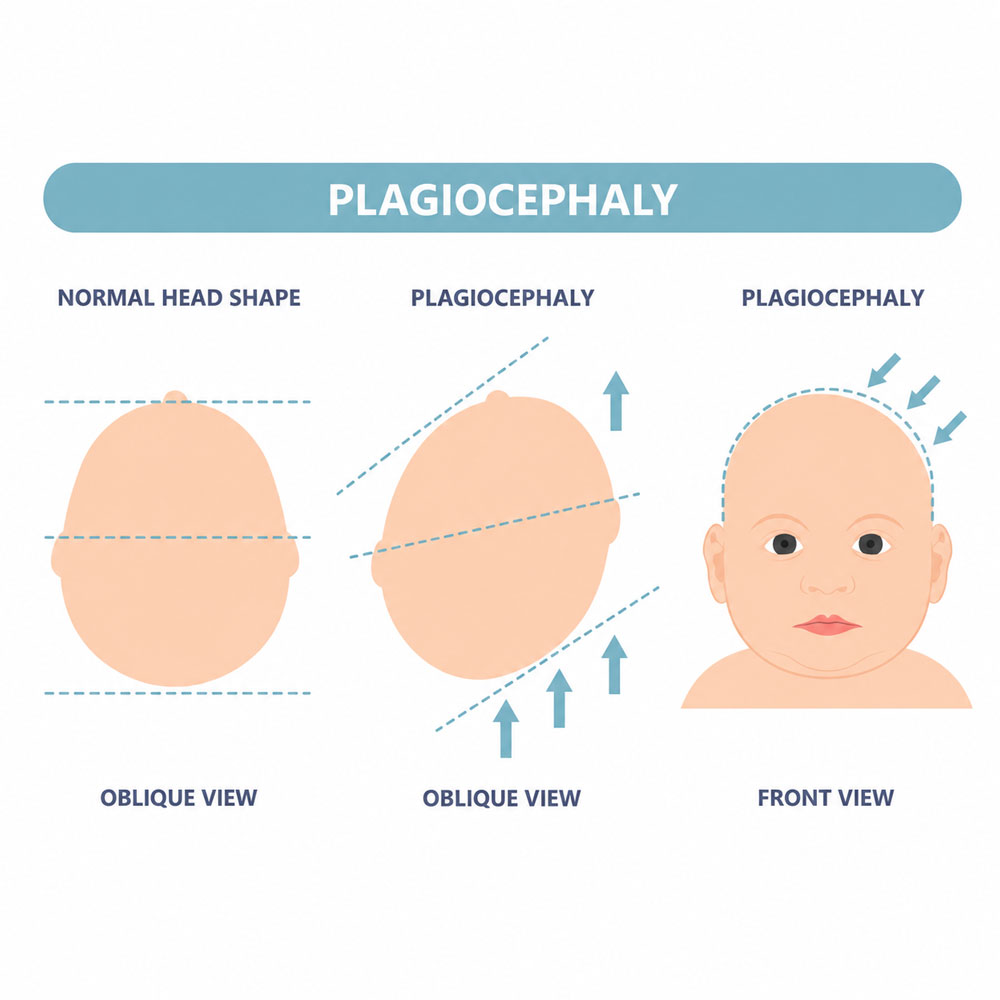
Torticollis involves a persistent head tilt or turning preference related to restricted neck movement or muscle imbalance. Plagiocephaly describes flattening or asymmetry of the skull, which may develop when a baby spends prolonged time resting in one position. Feeding difficulties may occur when limited head or neck movement makes certain nursing or bottle-feeding positions harder to maintain.
A baby may experience one of these concerns without having the others, although they can sometimes occur together. That is why evaluating movement, head positioning, feeding patterns, and overall development can provide a more complete picture.
When Torticollis Needs Medical Attention
Most infant torticollis is not a medical emergency, but persistent or unusual symptoms should be appropriately evaluated.
Contact your baby’s pediatrician if the head tilt appears suddenly, your baby seems ill or in significant pain, movement becomes progressively more limited, there is weakness or unusual movement elsewhere in the body, or developmental concerns are present. Significant head-shape changes, feeding problems, poor weight gain, or other concerning symptoms should also be discussed with your baby’s healthcare team.
Frequently Asked Questions
Can a chiropractor help a baby with torticollis?
Some parents seek pediatric chiropractic care when their baby has restricted neck movement, muscle tension, or a persistent head-turning preference. Chiropractic care may be one part of a broader conservative approach depending on the baby’s findings. At Whole Family Chiropractic, infants are evaluated individually and referrals are recommended when other pediatric specialists should be involved.
What causes torticollis in babies?
Infant torticollis may be associated with tightness in neck muscles, positioning before or after birth, birth-related factors, or other developmental and medical conditions. Because there are several possible causes, persistent head tilt or limited movement should be evaluated rather than assuming one specific explanation.
Can torticollis affect breastfeeding or bottle feeding?
It can. A baby who turns more comfortably toward one side may have difficulty maintaining certain feeding positions on the opposite side. Feeding difficulties can also have many other causes, so persistent latching, nursing, or weight-gain concerns should be evaluated appropriately.
Can torticollis cause a flat spot on a baby’s head?
A strong preference for looking toward one side may cause a baby to spend more time resting on the same area of the skull, which can contribute to positional flattening. Repositioning, tummy time, movement support, and pediatric evaluation may be recommended depending on the baby’s age and severity of the asymmetry.
Does infant torticollis improve over time?
Many babies improve with appropriate early management, particularly when movement restrictions are identified and addressed. The amount of improvement and time required can vary depending on the cause, severity, age of the baby, and consistency with recommended positioning or exercises.
Looking for Help With Your Baby’s Torticollis?
If you are searching for a pediatric chiropractor in Anchorage, help for infant torticollis, gentle chiropractic care for babies, or support for head-turning preference, neck tightness, and positional asymmetry, Whole Family Chiropractic is here to help you better understand your options.
Our team will gently evaluate your baby, explain what we find, and help determine whether pediatric chiropractic care, home recommendations, or additional professional support makes the most sense for your family.
Looking for a great family chiropractor in Anchorage?
Contact us today at 907-562-3060 for an appointment
Whole Family
Chiropractic
Office Hours
Monday, Wednesday & Friday
8:30am – 6pm
Tuesday & Thursday
2pm – 6pm
Saturday & Sunday
Closed