
Kyphosis / Rounded Upper Back
Kyphosis & Rounded Upper Back Treatment in Anchorage, AK
Kyphosis and a rounded upper back can affect more than appearance. Sitting upright, standing for long periods, reaching overhead, exercising, working at a computer, or even taking a deep breath may become more difficult when the upper spine becomes excessively rounded or stiff.
At Whole Family Chiropractic in Anchorage, AK, we help patients with kyphosis, rounded upper back posture, thoracic stiffness, forward head posture, and related postural concerns understand what may be contributing to their symptoms and what treatment options may be appropriate.
Our approach goes beyond simply telling you to “stand up straighter.” We evaluate your spinal alignment, posture, movement, muscle balance, structural findings, and health history so we can create a personalized plan designed to improve mobility, reduce mechanical stress, and support healthier spinal function.
What Is Kyphosis?
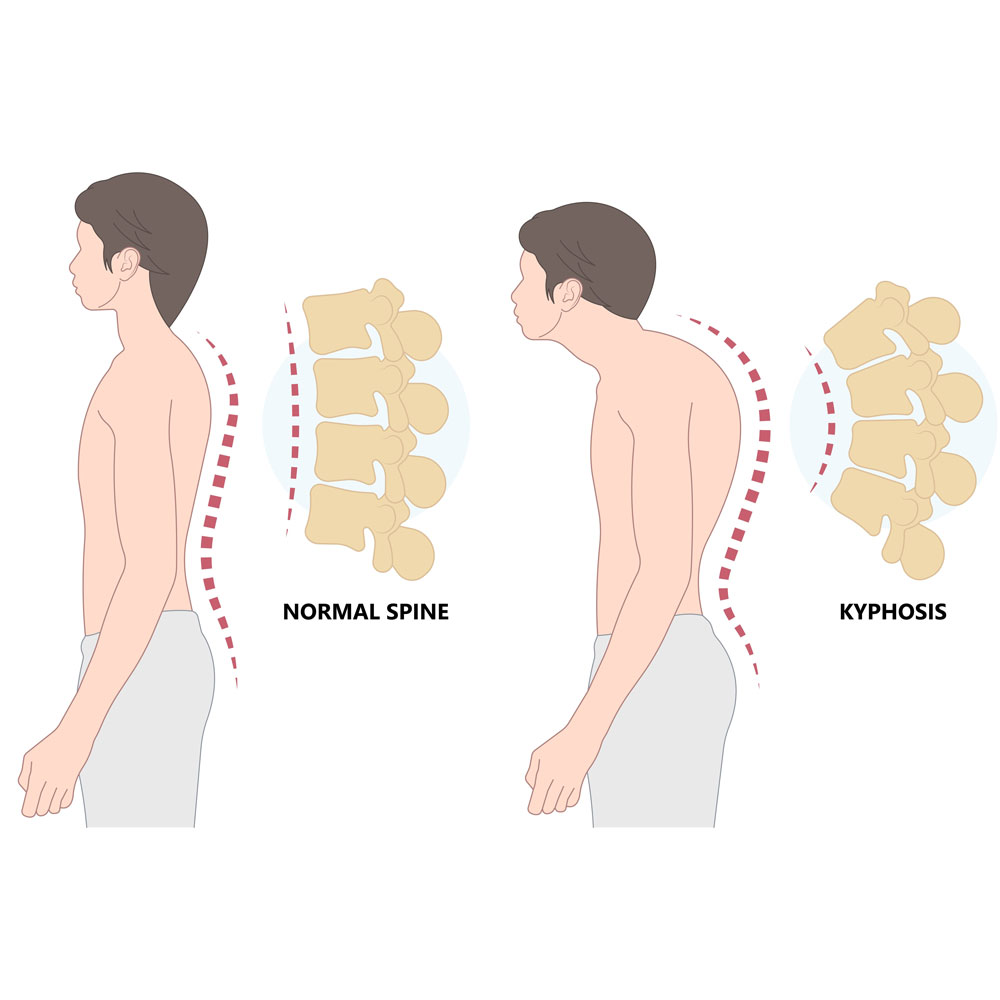
The thoracic spine naturally has a gentle outward curve when viewed from the side. Kyphosis describes an excessive rounding of this curve, which may create a visibly rounded or hunched appearance through the upper back.
Kyphosis can develop for different reasons. In some patients, it may be primarily postural, while others may have more structural changes involving the vertebrae or spinal discs. Age-related changes, osteoporosis, spinal degeneration, Scheuermann’s kyphosis, prolonged poor posture, and other conditions may also contribute to an increased thoracic curve.
Common Kyphosis and Rounded Upper Back Symptoms
Some people have an increased thoracic curve without significant discomfort. Others may experience stiffness, fatigue, or pain that becomes more noticeable with prolonged sitting or standing.
- Common symptoms may include:
- Visible rounding of the upper back
- Forward head posture
- Rounded or forward shoulders
- Upper or mid back pain
- Stiffness through the thoracic spine
- Muscle fatigue around the shoulders and upper back
- Reduced ability to stand comfortably upright
- Difficulty with certain overhead or upper-body movements
The appearance and severity of kyphosis can vary considerably depending on whether the condition is primarily postural, structural, degenerative, or related to another underlying condition.
When symptoms or postural changes continue, it is important to determine whether the problem involves spinal structure, joint mobility, muscle imbalance, bone health, daily habits, or a combination of factors.
When a Rounded Upper Back Starts Affecting Your Life
Kyphosis can gradually change the way you sit, stand, and move long before you realize how much it is affecting you. You may constantly correct your posture only to slump again minutes later, feel tired from trying to sit upright, or notice that your shoulders and neck become increasingly tense throughout the day.
For Anchorage residents who spend long hours working at desks, driving, studying, or staying indoors during colder months, postural habits can become especially repetitive. When stiffness, discomfort, or noticeable postural changes begin interfering with daily life, a more detailed evaluation can help determine what may be contributing.
Kyphosis and Rounded Upper Back Care in Anchorage
At Whole Family Chiropractic, our chiropractors in Anchorage evaluate more than the visible curve of your upper back. We look at spinal alignment, thoracic mobility, head and shoulder position, previous injuries, daily activities, muscle function, and structural patterns that may be contributing to your posture.
Depending on your findings, your care plan may include traditional chiropractic care, advanced corrective chiropractic, postural rehabilitation, corrective exercises, traction-based therapies, or a combination of approaches available within our Anchorage clinic.
The goal is not to assume every rounded upper back can be corrected in the same way. It is to determine whether your kyphosis is primarily postural, structural, degenerative, or related to another condition and build care around those findings.
Chiropractic Care for Kyphosis and Thoracic Stiffness
Traditional chiropractic care may be recommended when improving thoracic joint movement, reducing stiffness, and helping the upper and middle back move more comfortably are primary goals.
Whole Family Chiropractic uses multiple chiropractic techniques, allowing our doctors to adapt care based on the patient, severity of the curve, comfort level, bone health, and clinical findings. Patients with osteoporosis, advanced degeneration, or more significant structural kyphosis may require different approaches than patients with primarily postural changes.
Your chiropractor will determine whether an adjustment is appropriate and which techniques should be used.
Postural Rehabilitation and Corrective Exercises
Kyphosis often affects the way the neck, shoulders, upper back, and surrounding muscles work together.
Depending on your findings, rehabilitation may include exercises designed to improve thoracic mobility, strengthen postural muscles, support shoulder positioning, and improve awareness of how you sit and stand throughout the day.
Home recommendations may also address workstation setup, prolonged sitting, movement breaks, and daily habits that may reinforce rounded posture.
Advanced Corrective Chiropractic with Chiropractic BioPhysics
For patients with significant postural or structural changes, our team may recommend advanced corrective chiropractic care using Chiropractic BioPhysics® (CBP).
CBP focuses on spinal alignment, posture, and biomechanics rather than symptoms alone. When clinically appropriate, your evaluation may include diagnostic X-rays and postural analysis to measure spinal curves and identify structural patterns that may be contributing to excessive thoracic rounding.
A customized corrective plan may incorporate Mirror Image® adjustments, corrective exercises, traction, and home recommendations designed around your individual findings.
Kyphosis Rehabilitation and Supportive Care
A rounded upper back can also affect muscle endurance and movement patterns as surrounding muscles work harder to support the head, shoulders, and upper body.
Depending on your needs, care may include physical rehabilitation and supportive therapies available within our Anchorage clinic. Whole Family Chiropractic offers a comprehensive physical medicine program that can incorporate chiropractic care, rehabilitation, traction, postural exercises, and therapeutic techniques based on each patient’s individual needs.
Our goal is to help you improve mobility, support better posture, and move through everyday activities with greater comfort and confidence.
Kyphosis, Rounded Shoulders, and Forward Head Posture
These postural changes often occur together, but they are not exactly the same.
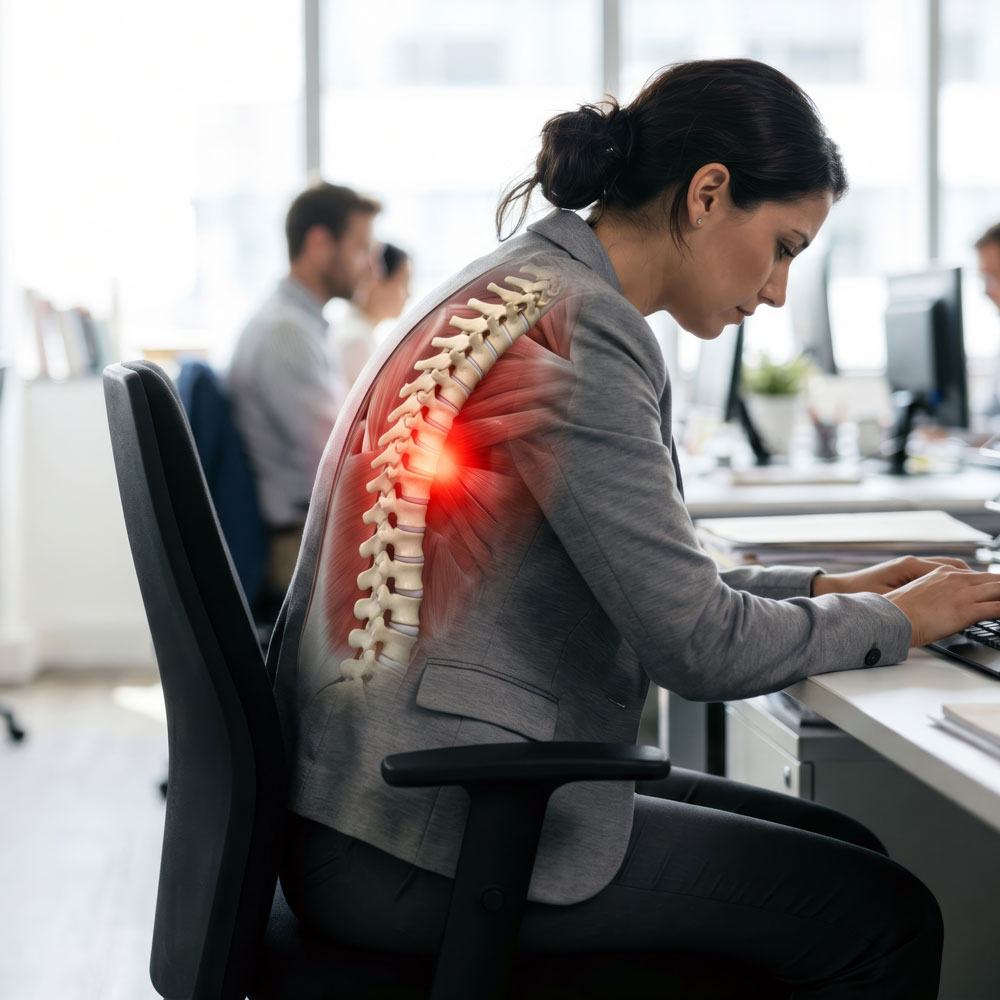
Kyphosis refers to an increased outward curvature of the thoracic spine. Rounded shoulders describe a forward position of the shoulders, while forward head posture occurs when the head rests farther forward relative to the shoulders and torso.
These patterns can influence one another, which is why a patient may appear to have several postural changes at the same time. However, identifying which changes are flexible and postural versus more structural is important when determining what type of care may be appropriate.
When Kyphosis Needs Medical Attention
Most postural kyphosis is not a medical emergency, but certain situations deserve additional evaluation.
Seek medical attention if you develop rapidly worsening spinal deformity, severe or unexplained back pain, significant weakness or numbness, difficulty walking, breathing problems associated with severe spinal curvature, or pain following a significant injury. Older adults with suspected osteoporosis or compression fractures should also receive appropriate medical evaluation.
Frequently Asked Questions
Can a chiropractor help with kyphosis?
Chiropractic care may be one component of a conservative plan for some patients with kyphosis, particularly when thoracic stiffness, reduced mobility, or postural factors are involved. Whether care is appropriate depends on the type and severity of the kyphosis, bone health, age, structural findings, and examination results. At Whole Family Chiropractic, we evaluate each patient individually before recommending care.
Is kyphosis the same as poor posture?
Not always. Some cases of rounded upper back posture are flexible and strongly influenced by daily habits, muscle balance, and positioning. Other forms of kyphosis are more structural and involve changes in the shape or alignment of the vertebrae. An evaluation can help determine which factors may be contributing.
Can kyphosis cause neck or shoulder pain?
It can. Increased rounding of the upper back may influence head and shoulder position and increase muscular demands through the neck and upper back. However, neck and shoulder pain can have many causes, so symptoms should not automatically be attributed to posture alone.
Do I need an X-ray for kyphosis?
Not every patient needs an X-ray. Your evaluation begins with your posture, symptoms, movement, health history, and physical examination. X-rays may be recommended when your chiropractor needs additional information about the degree of spinal curvature, vertebral structure, degeneration, or other structural changes.
Can a rounded upper back be corrected?
That depends on the cause. Flexible postural changes may respond differently than structural kyphosis caused by vertebral changes, degeneration, osteoporosis, or other conditions. Care may focus on improving mobility, strengthening supporting muscles, addressing daily posture, and, when clinically appropriate, using corrective chiropractic and traction-based approaches.
Ready to Get Help With Kyphosis or Rounded Upper Back Posture?
If you are searching for kyphosis treatment in Anchorage, a chiropractor for rounded upper back posture, posture correction in Anchorage, or help with thoracic stiffness, forward head posture, and upper back discomfort, Whole Family Chiropractic is here to help you understand your options.
Our team will evaluate your posture, explain what we find, and recommend the type of care that makes sense for you.
Looking for a great family chiropractor in Anchorage?
Contact us today at 907-562-3060 for an appointment
Whole Family
Chiropractic
Office Hours
Monday, Wednesday & Friday
8:30am – 6pm
Tuesday & Thursday
2pm – 6pm
Saturday & Sunday
Closed