
Peripheral Neuropathy
Peripheral Neuropathy Treatment in Anchorage, AK
Peripheral neuropathy can make everyday life feel unpredictable. Your feet may burn at night, your hands may tingle while working, or areas of your body may feel numb even though nothing appears visibly wrong. Some people describe the sensation as pins and needles, electrical shocks, unusual sensitivity, or feeling as though they are walking on cushions.
At Whole Family Chiropractic in Anchorage, AK, we help patients experiencing peripheral neuropathy symptoms, numbness, tingling, burning sensations, nerve pain, and related movement problems better understand what may be contributing to their symptoms and what supportive treatment options may be appropriate.
Peripheral neuropathy can have many possible causes, so our approach begins with understanding the bigger picture. We evaluate your health history, symptoms, movement, neurological findings, spinal function, posture, and other factors while helping determine when additional medical evaluation or co-management may be necessary.
What Is Peripheral Neuropathy?
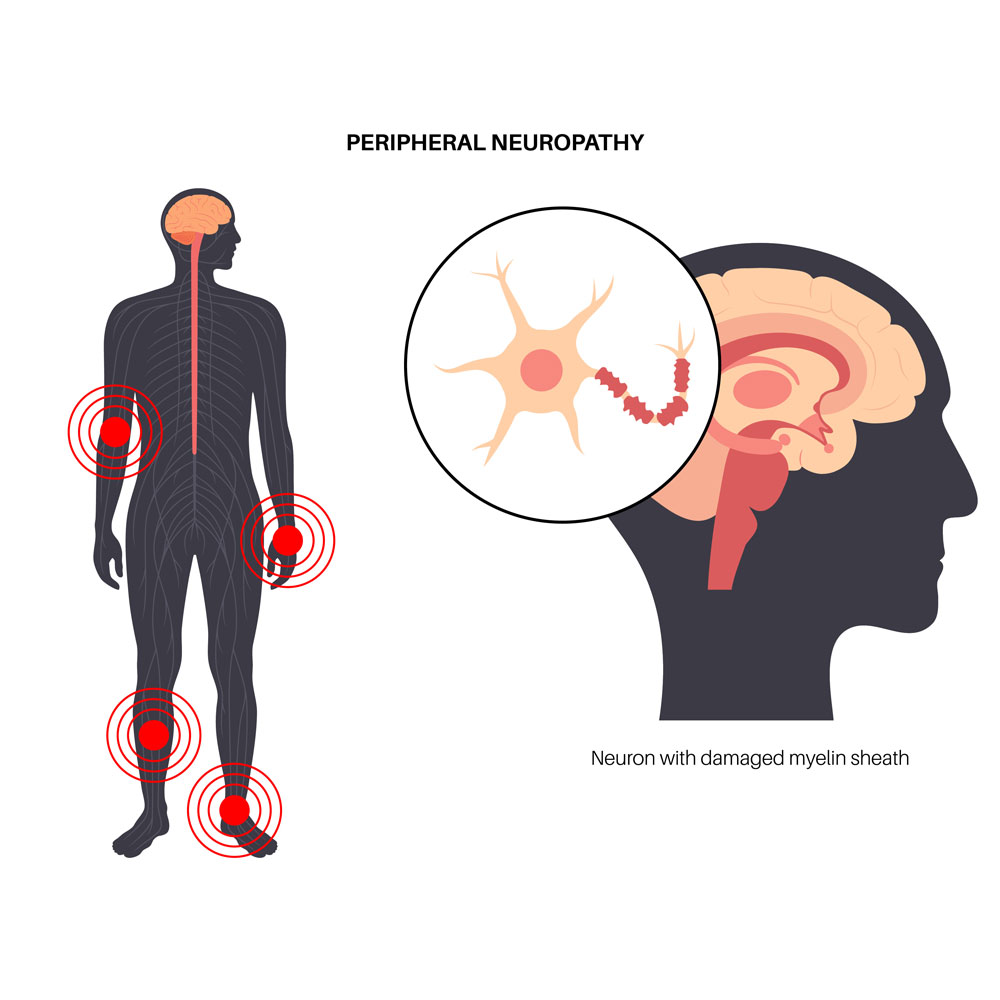
Peripheral neuropathy occurs when nerves outside the brain and spinal cord become damaged, irritated, or dysfunctional.
The peripheral nervous system carries information between your brain and spinal cord and the rest of your body. These nerves help control sensation, muscle movement, and certain automatic functions.
Peripheral neuropathy commonly affects the feet, legs, hands, or arms, often beginning in the toes or fingers before progressing farther into an extremity.
There are many possible causes. Peripheral neuropathy may be associated with diabetes, nutritional deficiencies, certain medications, chemotherapy, autoimmune conditions, infections, nerve injuries, metabolic disorders, excessive alcohol use, or other health conditions. In some patients, no specific cause is identified.
Because several spinal and musculoskeletal conditions can also cause numbness, tingling, burning, and weakness, an appropriate evaluation is important before assuming that every nerve symptom is peripheral neuropathy.
Common Peripheral Neuropathy Symptoms
Peripheral neuropathy can affect sensory nerves, motor nerves, or both, which means symptoms can vary considerably from one patient to another.
Common symptoms may include:
- Numbness in the feet, toes, hands, or fingers
- Tingling or pins-and-needles sensations
- Burning nerve pain
- Sharp, stabbing, or electrical sensations
- Increased sensitivity to touch
- Reduced ability to feel temperature or pressure
- Muscle weakness
- Leg or foot weakness
- Difficulty with balance or coordination
- Unsteadiness while walking
- Symptoms that become more noticeable at night
- Reduced awareness of injuries to the feet
Some people experience relatively mild tingling, while others develop significant pain, sensory loss, weakness, or difficulty walking.
The pattern of symptoms matters. Numbness affecting both feet in a similar pattern may suggest something different from pain traveling down only one leg from the lower back.
Determining where symptoms originate is an important first step toward determining what type of care may be appropriate.
When Neuropathy Starts Affecting Your Life
Nerve symptoms can gradually change the way you move and interact with your surroundings.
You may hesitate on stairs because your feet do not feel stable. Walking across icy Anchorage sidewalks may become more intimidating when your balance or sensation has changed. Exercise may become uncomfortable because your feet burn, and falling asleep may be difficult because tingling or nerve pain becomes more noticeable at night.
You may also find yourself avoiding activities you once enjoyed, including walking, hiking, fishing, working outdoors, exercising, or spending long periods on your feet.
When numbness, tingling, burning, weakness, or balance problems begin affecting your mobility or independence, simply trying to ignore the symptoms may not be enough.
Peripheral neuropathy should be appropriately evaluated, particularly when symptoms are new, progressing, unexplained, or accompanied by weakness.
Peripheral Neuropathy Care in Anchorage
At Whole Family Chiropractic, our chiropractors in Anchorage look beyond the location where you feel numbness, tingling, or burning.
We consider the pattern of your symptoms, health history, neurological findings, spinal movement, posture, previous injuries, daily activities, balance, strength, and other factors that may help distinguish peripheral neuropathy from spinal nerve irritation or another musculoskeletal problem.
When symptoms suggest an underlying medical cause, we may recommend appropriate medical evaluation or collaborative care. Conditions such as diabetes, vitamin deficiencies, medication-related neuropathy, and other systemic disorders require appropriate medical management.
Depending on your individual findings, supportive care at Whole Family Chiropractic may include chiropractic care when appropriate, physical rehabilitation, balance and strengthening exercises, corrective chiropractic, traction-based therapies, or other therapeutic approaches available within our Anchorage clinic.
The goal is not to assume that every case of neuropathy can be treated the same way. It is to understand what may be contributing to your symptoms and determine which forms of conservative support make sense for you.
Chiropractic Care and Peripheral Neuropathy Symptoms
Peripheral neuropathy is not simply a problem caused by a misaligned spine, and chiropractic adjustments do not eliminate every cause of peripheral nerve damage.
However, patients with peripheral neuropathy may also have back pain, neck pain, restricted spinal movement, arthritis, postural changes, or additional nerve irritation occurring alongside their neuropathy.
When these musculoskeletal factors are present, chiropractic care may be incorporated into a broader supportive treatment plan.
Whole Family Chiropractic uses multiple chiropractic techniques, allowing our doctors to modify care based on the patient’s age, health history, neurological findings, comfort level, and specific condition.
Your chiropractor will determine whether chiropractic treatment is appropriate and which techniques may safely support your mobility and overall function.
When Spinal Nerve Compression Mimics Neuropathy
Not everyone experiencing numbness, burning, or tingling has peripheral neuropathy.
A pinched spinal nerve, herniated disc, bulging disc, spinal stenosis, degenerative disc disease, or other spinal condition can create symptoms that sometimes resemble neuropathy.
For example, irritation of a lumbar nerve root may cause pain, numbness, tingling, or weakness traveling into one leg or foot. A cervical nerve problem may produce similar symptoms in an arm or hand.
When clinical findings suggest that spinal nerve compression may be contributing to symptoms, Whole Family Chiropractic may consider treatments directed toward the affected region of the spine.
Depending on your condition, this could include chiropractic care, rehabilitation, corrective care, or cervical or lumbar disc decompression.
Determining whether symptoms are coming from a peripheral nerve, spinal nerve root, or combination of factors is essential before deciding which treatment approach makes sense.
Rehabilitation, Strength, and Balance Support
Neuropathy can affect more than sensation.
When you cannot accurately feel the ground beneath your feet, your body may have greater difficulty responding to changes in surface or position. Muscle weakness and reduced coordination can further affect balance and walking.
Depending on your individual findings, supportive rehabilitation may focus on:
- Improving lower-extremity strength
- Supporting balance and coordination
- Maintaining joint mobility
- Improving movement confidence
- Maintaining flexibility
- Addressing compensatory movement patterns
- Supporting safer everyday activity
Whole Family Chiropractic offers physical rehabilitation and supportive therapies that may be incorporated into a broader care plan based on each patient’s individual needs.
For Anchorage residents navigating snow and icy surfaces for a large portion of the year, maintaining strength, balance, and confident movement can be particularly important.
Advanced Corrective Chiropractic with Chiropractic BioPhysics®
Some patients experiencing neuropathy symptoms also have significant postural or structural spinal problems.
When appropriate, our team may recommend advanced corrective chiropractic using Chiropractic BioPhysics® (CBP) to evaluate spinal alignment, posture, and biomechanics.
When clinically indicated, diagnostic X-rays and postural analysis can help identify structural patterns that may be contributing to additional spinal stress or musculoskeletal symptoms occurring alongside neuropathy.
A personalized corrective program may incorporate Mirror Image® adjustments, corrective exercises, traction, and home recommendations based on individual findings.
CBP does not treat systemic causes of peripheral nerve damage such as diabetes or vitamin deficiency. Instead, it may be used when correcting or managing separate spinal and postural problems is appropriate as part of a broader plan for improving movement and function.
Peripheral Neuropathy vs. a Pinched Nerve
Both can cause numbness and tingling, but they are not the same condition.

Peripheral neuropathy involves damage or dysfunction affecting peripheral nerves outside the brain and spinal cord. Symptoms frequently begin in the feet or hands and may affect both sides of the body.
A pinched nerve or radiculopathy typically involves irritation or compression of a specific spinal nerve root. Symptoms often follow a more defined pathway into one arm or leg and may be associated with neck or lower back pain.
For example, someone with diabetic peripheral neuropathy may experience symmetrical burning and numbness in both feet. Someone with lumbar radiculopathy may experience pain and tingling traveling from the lower back through one buttock and into one leg.
It is also possible for a patient to experience both conditions at the same time.
That is why identifying the source and pattern of nerve symptoms matters before recommending treatment.
When Neuropathy Symptoms Need Urgent Medical Attention
Neuropathy symptoms should not automatically be assumed to be harmless, particularly when they are new or rapidly changing.
Seek prompt medical evaluation if you develop sudden or rapidly worsening weakness, significant difficulty walking, sudden loss of coordination, unexplained widespread numbness, or rapidly progressing neurological symptoms.
Urgent medical attention is also appropriate for new loss of bladder or bowel control, numbness around the groin or inner thighs, sudden one-sided weakness, facial drooping, difficulty speaking, or other sudden neurological changes.
People with significant loss of sensation in their feet should also regularly inspect their skin for cuts, sores, burns, or other injuries that may go unnoticed, particularly when diabetes is present.
Frequently Asked Questions
Can a chiropractor help with peripheral neuropathy?
It depends on what is causing your symptoms. Peripheral neuropathy can result from diabetes, vitamin deficiencies, medications, injuries, autoimmune conditions, and many other causes that chiropractic treatment cannot directly correct. However, chiropractic care, rehabilitation, and other conservative therapies may sometimes help address separate musculoskeletal problems, mobility limitations, or spinal nerve irritation occurring alongside neuropathy. At Whole Family Chiropractic, we evaluate each patient individually before recommending care.
What causes peripheral neuropathy?
Peripheral neuropathy can have many causes. Diabetes is one of the most common, but neuropathy may also be associated with vitamin deficiencies, certain medications and chemotherapy treatments, autoimmune diseases, infections, injuries, metabolic conditions, alcohol use, inherited disorders, and other health problems. Some cases are classified as idiopathic, meaning no specific cause is identified.
What does peripheral neuropathy feel like?
People commonly describe neuropathy as numbness, tingling, pins and needles, burning, stabbing pain, electrical sensations, unusual sensitivity, or reduced ability to feel touch and temperature. Symptoms often begin in the feet or hands and may gradually spread.
Is peripheral neuropathy the same as sciatica?
No. Peripheral neuropathy involves peripheral nerve dysfunction, while sciatica generally refers to symptoms associated with irritation of the sciatic nerve or spinal nerve roots contributing to it. Sciatica commonly travels from the lower back or buttock into one leg, while peripheral neuropathy frequently affects both feet or both hands in a more symmetrical pattern.
Can a pinched nerve feel like peripheral neuropathy?
Yes. A pinched nerve in the neck or lower back can cause numbness, tingling, burning, weakness, or electrical sensations that may resemble neuropathy. Herniated discs, spinal stenosis, degenerative disc disease, and other spinal conditions can all irritate nerve roots. A neurological and musculoskeletal evaluation can help determine which type of nerve problem may be present.
Can peripheral neuropathy be reversed?
That depends on the cause and extent of nerve damage. Some neuropathies may improve when an underlying cause can be identified and appropriately treated, while others may be permanent or require long-term management. Early evaluation is important because identifying and treating an underlying medical condition may help prevent additional nerve damage in some cases.
Can diabetes cause peripheral neuropathy?
Yes. Diabetes is a common cause of peripheral neuropathy, particularly when elevated blood sugar levels damage peripheral nerves over time. Patients with diabetic neuropathy should work closely with their medical provider to manage diabetes and monitor their feet and overall nerve health.
Do I need nerve testing for peripheral neuropathy?
Not every patient requires the same testing. Depending on your symptoms and medical history, evaluation may involve strength, sensation, reflexes, balance, and other neurological testing. A medical provider may also recommend blood testing, nerve conduction studies, electromyography, imaging, or other diagnostic procedures when necessary to identify the cause.
Can neuropathy affect balance?
Yes. Reduced sensation in the feet can make it more difficult for your nervous system to accurately detect where your feet are positioned. Neuropathy may also affect muscle strength. Together, these changes can contribute to unsteadiness, especially on uneven or slippery surfaces.
Ready to get help with peripheral neuropathy symptoms?
If you are searching for peripheral neuropathy care in Anchorage, help for numbness and tingling in your feet, a chiropractor for nerve-related symptoms, or conservative support for burning nerve pain, balance problems, or related mobility concerns, Whole Family Chiropractic is here to help you better understand what may be contributing to your symptoms.
Our team will evaluate your condition, explain what we find, and help determine whether care within our office, additional medical evaluation, or a collaborative approach makes the most sense for you.
Looking for a great family chiropractor in Anchorage?
Contact us today at 907-562-3060 for an appointment
Whole Family
Chiropractic
Office Hours
Monday, Wednesday & Friday
8:30am – 6pm
Tuesday & Thursday
2pm – 6pm
Saturday & Sunday
Closed