
Blogs & Articles
How to Relieve Sciatica Without Surgery?
If you’re searching for how to relieve sciatica without surgery, here’s the first thing worth knowing: most people don’t need an operation. In fact, the majority of sciatica cases respond well to structured, non-surgical care – when the right approach is used consistently.
This guide covers what actually works, what to expect, and when to seek help.
*This article is educational and does not replace a personalized clinical evaluation.
Quick Answer: Can Sciatica Be Relieved Without Surgery?
Yes and for most people, it should be the first path explored.
- Most sciatica cases improve without surgery given the right combination of self-care and professional treatment
- The core goal is reducing pressure on the sciatic nerve – not just masking the pain signal
- Conservative, non-surgical sciatica treatment is the standard first approach recommended across clinical guidelines
Surgery is typically reserved for cases with severe nerve damage, progressive neurological loss, or failure of extended conservative care.
What Is Sciatica and Why Does It Cause So Much Pain?
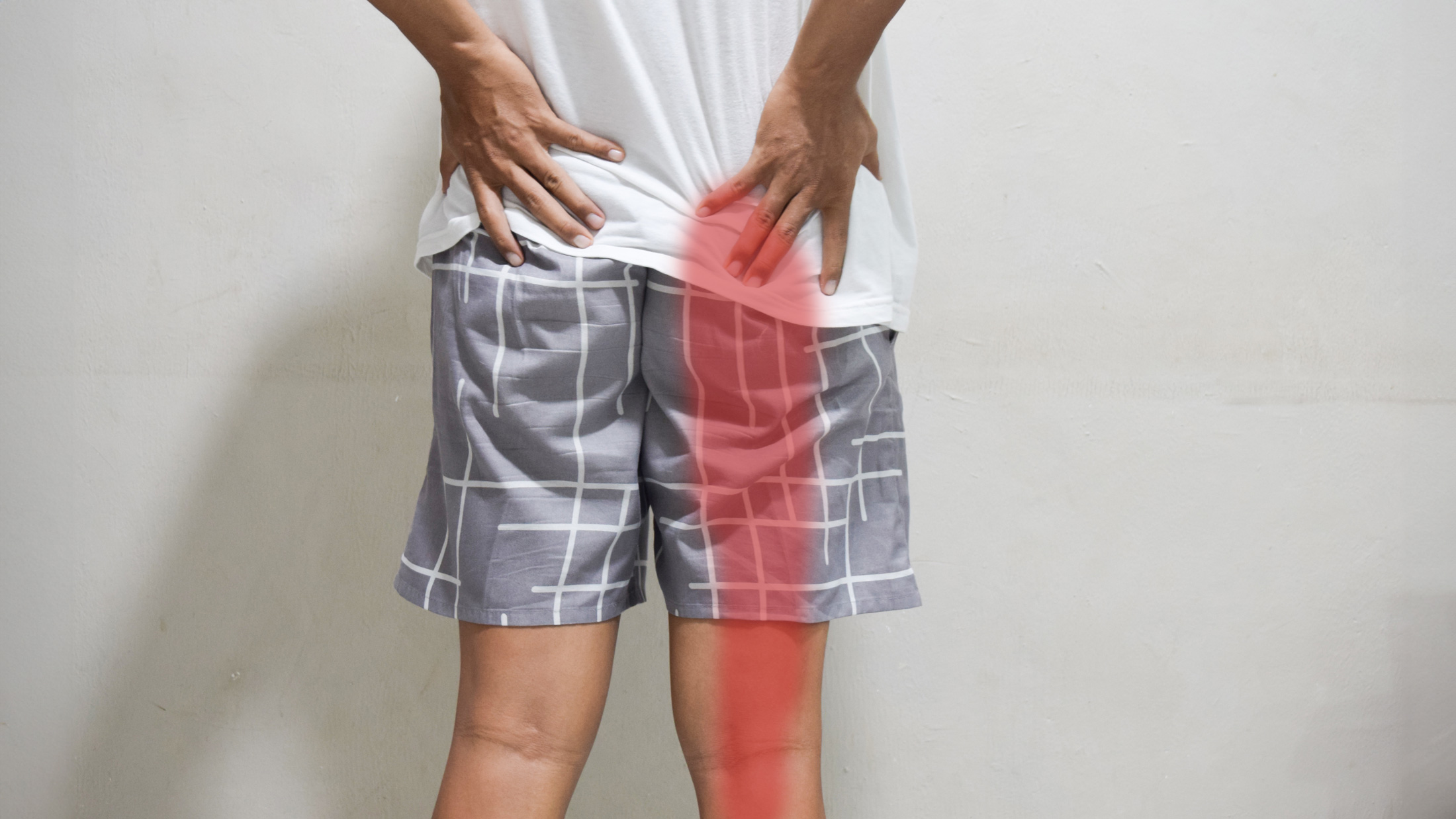
The sciatic nerve is the longest nerve in the body. It originates from nerve roots in the lower lumbar spine, travels through the buttock, and branches down each leg to the foot. When this nerve is compressed or irritated anywhere along that path, the result is sciatica – pain, burning, tingling, or numbness that can run from the lower back all the way to the foot.
Common causes of sciatic nerve compression:
- Herniated or bulging disc pressing on a lumbar nerve root
- Spinal misalignment narrowing the space where nerve roots exit
- Piriformis muscle tightness compressing the nerve in the hip
- Spinal stenosis – narrowing of the spinal canal
The cause matters, because it shapes the most effective treatment approach.
Why Most People Don’t Need Surgery for Sciatica
Surgery addresses a specific, structural problem and it’s genuinely necessary in some cases. But the research consistently shows that conservative care produces comparable outcomes for most disc-related sciatica.
A landmark study by Dr. Wilco Peul, published in the New England Journal of Medicine, found that at one-year follow-up, surgical and conservative groups showed no significant difference in outcomes and conservative care avoided surgical risks entirely.
The body can and does recover from nerve compression – especially when structural contributors are properly addressed.
The Real Goal: Relieve Pressure on the Sciatic Nerve
Pain medication quiets the signal. What actually heals sciatica is removing the pressure creating that signal.
Every effective non-surgical sciatica treatment – whether it’s exercise, chiropractic care, or physical therapy – works by reducing the load on the compressed nerve root. That’s the mechanism. Understanding it helps you choose approaches that actually target the source, not just the sensation.
Best Ways to Relieve Sciatica Without Surgery
Stay Active Instead of Prolonged Rest
Complete bed rest worsens sciatica in most cases. Gentle, consistent movement maintains circulation, reduces stiffness, and prevents muscle deconditioning. Short walks and light daily activity are more helpful than staying still.
Use Ice and Heat for Symptom Relief
- Ice (first 48–72 hours) – reduces acute inflammation around the nerve
- Heat (after inflammation settles) – relaxes surrounding muscle tension
These provide genuine short-term sciatica pain relief but don’t address the underlying compression.
Gentle Stretching and Mobility Exercises
Targeted stretching reduces tension in the muscles that can aggravate the sciatic nerve:
- Piriformis stretch – hip rotator release
- Knee-to-chest stretch – lumbar decompression
- Hamstring stretch – reduces pull on the lower lumbar spine
Move slowly. Pain that worsens with a stretch is a signal to stop.
Physical Therapy and Guided Exercise
A structured PT program builds core and spinal stability – reducing the mechanical load that caused the nerve compression in the first place. This is particularly valuable for preventing recurrence.
Medications and Anti-Inflammatory Strategies
NSAIDs and muscle relaxants can provide meaningful short-term relief during acute flare-ups. They are not a long-term solution – symptoms typically return if the structural cause isn’t addressed.
Chiropractic Care as a Non-Surgical Option
Spinal adjustments restore proper vertebral alignment, reducing the mechanical pressure on compressed nerve roots. For disc-related sciatica especially, correcting spinal position removes the load driving the nerve irritation – rather than just managing its effects.
What Works for Short-Term Relief vs Long-Term Recovery
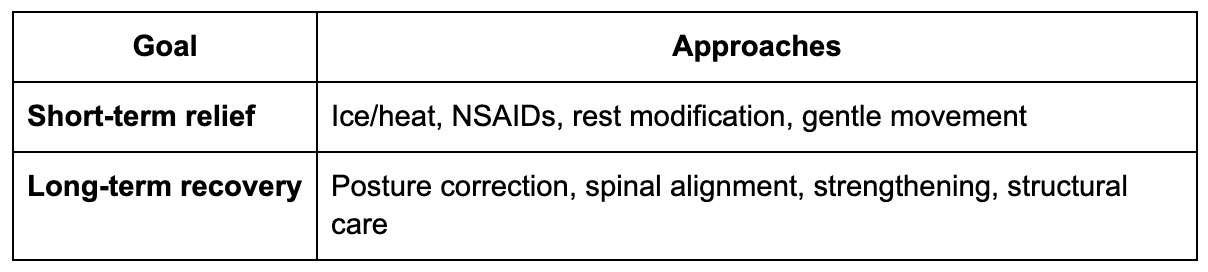
The mistake most people make: stopping at short-term relief and never addressing the underlying cause. That’s why sciatica so often comes back.
Can Posture and Spinal Alignment Affect Sciatica?
Significantly. Poor posture – particularly prolonged sitting, anterior pelvic tilt, and forward head positioning – increases compressive load on the lumbar discs and narrows the spaces through which nerve roots exit the spine.
Correcting these structural contributors is central to lasting sciatica treatment without surgery. A spine that’s mechanically balanced places less sustained pressure on the sciatic nerve pathway.
How Corrective Chiropractic Care Helps Address the Root Cause
Standard chiropractic adjustments improve joint mobility and reduce nerve irritation. Corrective care goes further – identifying the specific structural misalignment pattern contributing to nerve compression and systematically addressing it over a structured treatment plan.
For patients who’ve been managing sciatica with medication and rest alone, this structural layer is often what’s been missing.
How Long Does It Take to Relieve Sciatica Without Surgery?
Realistic expectations by severity:
- Mild or recent onset – improvements often within 2–6 weeks with consistent care
- Moderate or recurring – 2–4 months of structured treatment
- Chronic sciatica (6+ months) – longer, more involved correction; structural changes take time to reverse
Consistency matters more than intensity. Sporadic treatment almost always produces sporadic results.
When Home Care Is Not Enough
Consider professional evaluation if:
- Pain has persisted for more than 2–3 weeks without improvement
- You’re experiencing recurring episodes of the same pain pattern
- Mobility is noticeably limited in daily activities
- Stretching or movement worsens rather than relieves symptoms
When Surgery May Be Necessary
Surgery becomes an appropriate consideration when:
- Conservative care has been applied consistently for 6–12 weeks without improvement
- There is progressive neurological loss – worsening weakness or sensation loss
- Imaging confirms significant structural compression that conservative care cannot adequately address
For most patients, this threshold is never reached with appropriate non-surgical care.
Final Thoughts: The Best Way to Relieve Sciatica Without Surgery
The most effective path to lasting sciatica relief is one that addresses the structural cause – not just the symptom. Most people can recover fully without surgery when the right combination of professional evaluation, structural correction, and consistent self-care is applied early.
Don’t wait for the pain to become unbearable. The window for straightforward correction is widest before the condition becomes chronic.
Ready to Relieve Sciatica Without Surgery?
If sciatica has been limiting your daily life or keeps returning despite rest and stretching – a proper spinal evaluation will tell you what’s actually driving it.
At Whole Family Chiropractic, Dr. Ryan and Dr. Jessica Dachowski offer thorough, patient-focused sciatica evaluations as your trusted chiropractor Anchorage. We’ll identify the structural cause, explain your options clearly, and build a personalized plan focused on real, lasting relief — not just temporary comfort.
Schedule your evaluation today and take the first real step toward a life without sciatica holding you back.