
Blogs & Articles
Top 5 Ways to Protect Your Back During Fishing Season in Anchorage, Alaska
It’s that time of the year – the snow is melting, the grass is beginning to come out of hiding, winter breakup in Alaska is coating everything with a hint of respiratory and auto engine filter-clogging grey dust, dirt, silt, and grime – and of course, fishing season is on the mind of many residents in the state.
Anglers young and old, male and female, sport guides and commercial operators, ‘Chechakos’ and veterans are all start counting down the days for the season opener after the school year Spring Break. They are sharpening hooks, buying gear, tying flies, repairing holes in their nets, rigging up their rod, buying more gear, cleaning boats and checking engines, buying even more gear, waterproofing their waders and boots, and the cycle repeats. They are ready for trolling, snagging, dip netting, flossing, slaying, fly fishing, filleting, grilling, smoking and the obligatory fish-holding selfie-taking mementos to promote their trophy to all their friends still stuck at the office.
Unfortunately over the last 15 years, we have discovered in our Anchorage-based Whole family Chiropractic clinic that a major, yet preventable tragedy that can ruin a weekend on the river, a charter that has been booked for months, or a kamikaze trip to get a spot after hearing “they’re running”, is having the experience of lower back pain. Your back is involved with so many aspects of the sport of fishing from casting, to filleting, to the exciting full body hop when you squeal “fish on!”, that just like grabbing your license on the table before you go, it cannot be taken for granted.
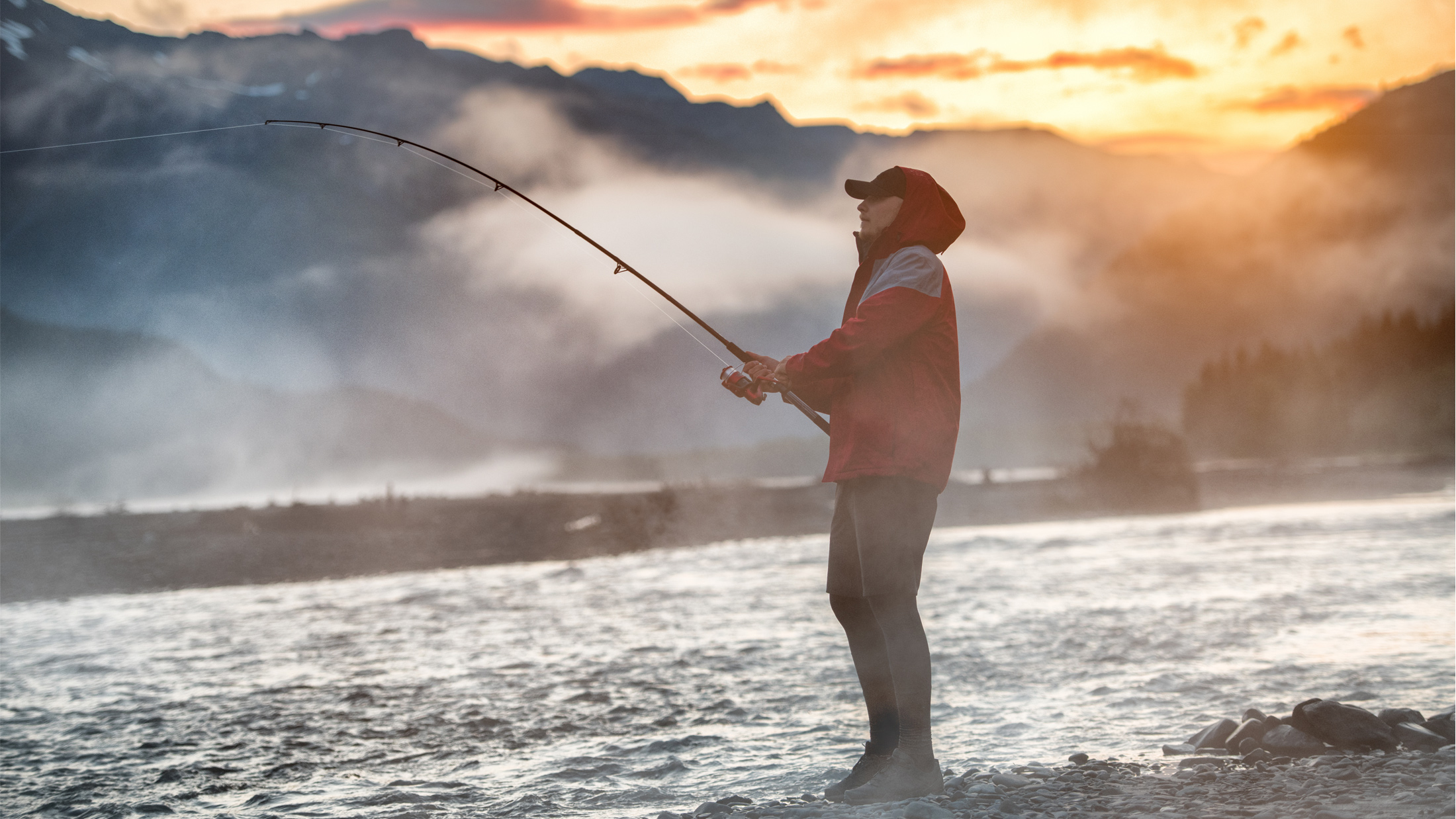
Structurally speaking, your lower back, particularly your lumbar spine should have a curve to it. It’s similar in shape (although inverted) to your fishing rod when you have a king salmon hit your line like an out-of-control freight train at full speed. The structure of your spine determines the strength of it, just like the curve in the bent rod that doesn’t break when you fight a fish. The low back curve (or “lordosis” for the scrabble players), has the majority of the curve at the bottom of the spine and flattens toward the top. Similarly, a good strong pole with a 40lb king on it will bend at the top and be straight at the bottom. Now, if your back ever looks like the pole in the shape of your pole (an inverted curve), you will be in a world of hurt. But that is what happens every year when fishermen, fisherwomen, and their fisherkids focus on fun and fish, but forget about form and function.
The curve in the low back not only provides strength, but resilience, mobility and tolerance to compressive loads as well. When the curve is present as it is designed to be, then the pressure placed upon the spinal column can be dissipated appropriately through the joints into the pelvis and hips, and eventually to the lower extremities. This prevents any type of abnormal wear and tear stress accumulation on the vulnerable shock absorbing discs located between each spinal bone. Now before you fall asleep like you are dosing on a 1-man zodiac because the fish aren’t biting – you need to pay attention.
If that curve is not in place as a result of trauma, such as a car accident, a past sports injury, sitting at the computer for the majority of your day, hustling on the job site from morning until evening, or while hurrying away from a Grizz’ that has eyes on your stringer of fish by the riverbank then you can end up with some big problems when you least want them. Problems that include a constant grabbing, aching pain that in bad cases can result in shooting bolts of electricity into the legs or numbness of the extremities. Additionally, you may experience lack of sleep or tossing and turning because it feels like you have been the one snagged with a hook in your back. Lastly, not only can it affect your work and home life making you irritable and grumpy, but it can take you away from some of the activities you enjoy most with the people you love and care about or on the other hand just so you can enjoy the activity it causes you to have to hit your liver and kidneys harder than bonking a salmon with medications that simply serve to cover up symptoms instead of addressing the underlying cause.
The loss of curve in your low back will force the shock absorbers of your spine to bear (not the brown furry kind) more load than what they were designed for. This causes the discs to become stressed and compressed before they ever become symptomatic. So, your body may not “feel” anything as your structure is getting progressively weaker until you bend to get your tackle box or pick up that freshly caught salmon and your back “gives out”, “goes out” or feels like you “got shot” and you wince in pain like it exploded. Suddenly, the fish doesn’t matter. All you care about is your next step, and how you are going to get home.
On a boat, in the field, or wading in a stream is the last place you want to find yourself when this happens. When your spinal cushions (aka “discs”, aka “shock absorbers”) are stressed, then repetitive movements like casting a fly rod, reeling in a sockeye, or turning and dragging a dip net up the shore time and time again can set you up for injury such as a herniation or bulge of the disc (think of a leaking raspberry jelly doughnut). Unfortunately, that type of mechanical failure of the disc integrity will end your trip very quickly as the disc, bone, and posture will shift abnormally into a compensated position causing spasm, pain, and worse yet, pressure on the delicate nerves that you need to be healthy. The nerves are used by the brain to always send signals and impulses to every single cell, tissue, and organ so that normal operations and healing can be maintained. They are the main conduit of communication in the body, and are most vulnerable to compression and tensile forces from misalignments of the spine resulting from major and repetitive minor trauma.
If you want to make sure that you don’t experience back pain resulting from postural and nerve stress this fishing season, follow the 5 to Thrive steps:
- When lifting coolers use the “Buddy System” or get a small cooler and make multiple trips. When lifting large coolers by yourself, there is a good chance that you will put your spine in abnormal positions that will surely create too much stress on the joints, discs, and muscles predisposing a weakened area in the body to progress to injury, especially when fatigued from a day on the water. Tip: Get a spotter, a friend, or an innocent teenage bystander and lift with your legs and bend down to get a good grip. Waders can be restrictive, so consider removing them before getting underneath your coho carcass coffin. Keep your back straight, lift with your legs and maneuver it into the vehicle for transport to the freezer back home. Bonus: When filleting – try to bring the table to a working height so you are not leaning over it for extended periods.
- Make sure your tackle box has a back brace or lumbar support that can be easily placed on under your waders or jacket on standby. Anytime you know that you will be lifting heavier than you are accustomed to doing on a regular basis, bring your support belt. It’s a form of insurance for your spine and protection during movements. You won’t develop a dependence on it and it won’t keep the bears away, but it will protect your discs in the case that something should move, twist, or bend wrong while your enjoying the sights, sounds, and scenes of nature at its finest.
- When leaning over the side of a boat use a “scissored” stance with one leg in front of the other. Kneel down with pressure on your forward leg. If you have to do a hinge or deadlift type of movement to pull a full net or a trophy catch on your hook into the boat, do it with a straight back not a bent one.
- When you land a fish make sure to remember back straight, rod bent – not back bent and rod straight. Let the pole do the work, not your back.
- Get a structural evaluation at Whole Family Chiropractic to determine if your spine and posture need a “tune up” before getting to your favorite “honey hole” to make certain that you won’t be at risk for anything in your structure that could ruin your day, your trip or your season. Many people think chiropractic care is only for when you are in pain, hurt, or experience a trauma. However, newer data suggests that chiropractic care, especially advanced corrective care, can be great for prevention of pain, increasing longevity, and helping to keep you healing for a lifetime. Don’t wait until the crisis, because the fish may not be there when you get back.
In the end, you can keep your back all summer when you have healthy biomechanics and an optimal spinal structure. Doing this will ensure the only thing bending this fishing season is your fishing pole and not your back.
Fish On!